Artificial intelligence has changed the way businesses create visual content. Tools like ChatGPT and AI image generators can now produce logos, illustrations, advertisements, and social media graphics in seconds. While this technology is impressive, there is still a significant difference between auto-generated visuals and professionally designed brand assets created by an experienced graphic designer.
AI should not replace professional design, but rather be used to enhance the creative process.
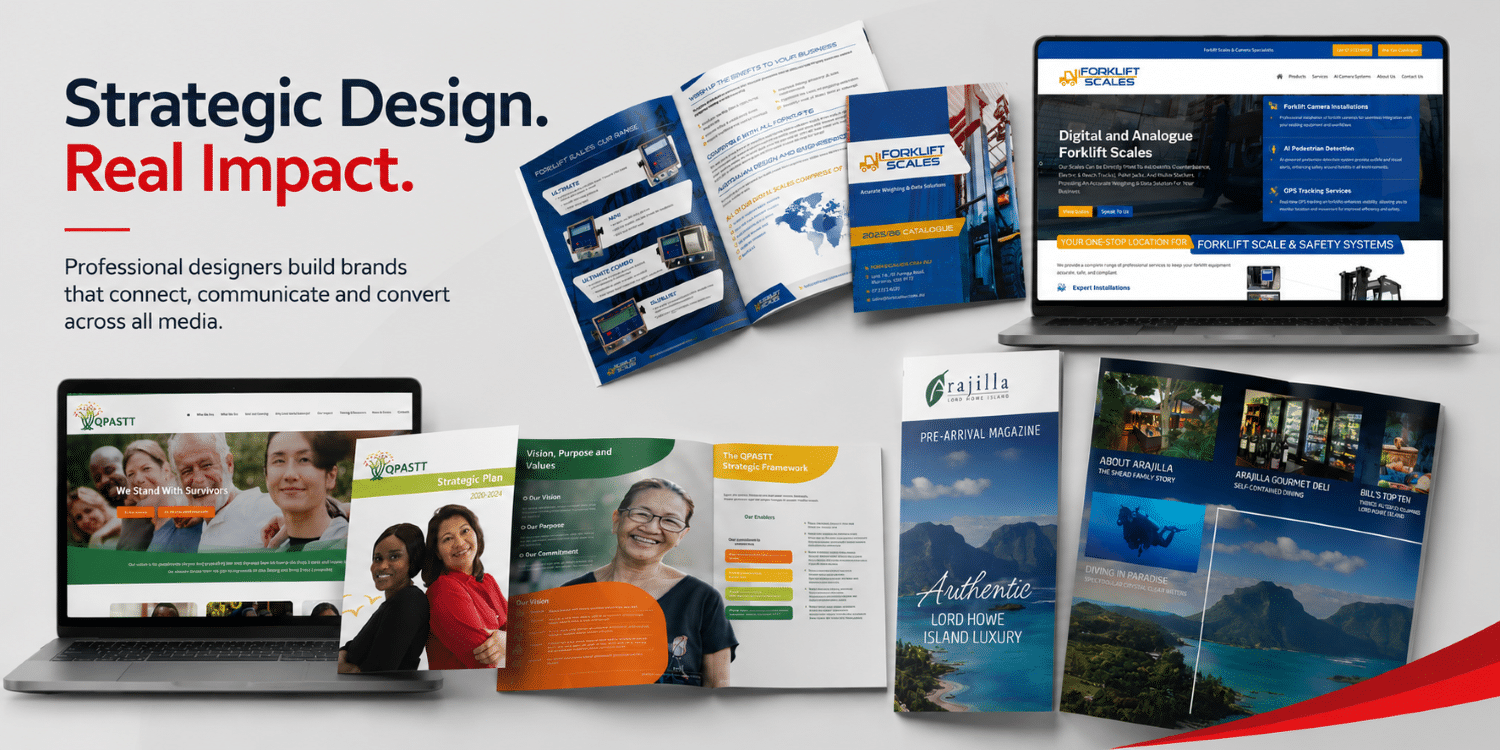
This header banner depicts various client projects our graphic design team have completed – including brochures, logos & websites.
Designers Create Brands.
AI-generated artwork can look impressive, but creating a professional brand requires far more than a good-looking image.
Successful brands need consistency across every touchpoint; websites, social media, print materials, packaging, signage, advertising, email marketing and merchandise. This requires structured brand systems, including logo standards, typography, colour palettes, layouts and image treatments that work together across all applications.
While AI can generate creative concepts quickly, its outputs are typically raster-based images that lack the production-ready files required for commercial use. AI-generated artwork often cannot provide scalable vector files, accurate colour management, print-ready formats, logo variations or the technical specifications needed for signage, packaging, embroidery and large-format printing.
As a result, businesses frequently discover that an AI-generated logo that looks good on screen becomes problematic when it needs to be reproduced professionally. Common issues include pixelation, colour inconsistencies, poor print quality, distorted scaling and a lack of brand consistency between assets.
In practice, AI often gets a concept 80–90% of the way there. A professional graphic designer takes that concept and transforms it into a complete brand system with properly constructed artwork, scalable vector files, production-ready outputs and consistent application across every channel.

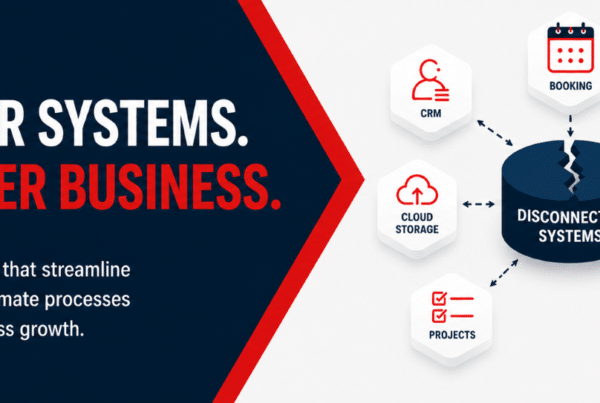
AI generated info-graphic used to condense & display information
Branding Requires Strategy.
Beyond producing quality imagery and graphics, the most significant contribution of a professional designer is in the strategic and commercial thinking that sits behind effective branding. Good design is not simply about creating something that looks attractive. Every design decision should support business objectives, connect with the target audience and reinforce the brand’s position in the marketplace. Professional designers consider factors such as user behaviour, readability, accessibility, marketing goals and customer perception to create branding that performs as well as it looks.
AI can generate visuals based on patterns and prompts, but it does not understand business strategy, customer psychology or long-term brand development. It cannot evaluate whether a design aligns with your market position, differentiates you from competitors or supports future growth. There is also the often-overlooked issue of intellectual property and trademark risk. AI-generated logos and brand assets may unintentionally resemble existing businesses, trademarks or competitor brands. Because AI models are trained on vast collections of existing content, there is no guarantee that a generated design is original, legally protectable or capable of securing trademark registration.
For businesses investing in signage, uniforms, packaging, websites and marketing campaigns, discovering these issues after launch can be costly. A rebrand may require replacing assets, redesigning marketing materials and rebuilding brand recognition from scratch. Professional designers and branding specialists reduce these risks through research, original concept development, competitor analysis and trademark-aware design practices. Combined with early trademark protection, this helps businesses build brands that are not only visually appealing, but strategically positioned, legally defensible and designed for long-term growth.

AI generated info-graphic used to condense & display information
Relatability Builds Brand Trust.
One of the most overlooked aspects of AI-generated branding is how audiences perceive it. While AI-generated visuals can be useful for concept development, audiences connect most strongly with authentic imagery that reflects real people, real workplaces and genuine experiences.
Customers want to see the businesses they are buying from. Whether it’s a construction team on-site, healthcare professionals interacting with clients, or a hospitality venue showcasing its actual environment, authentic imagery helps create trust, familiarity and emotional connection.
Professional photography and graphic design work together to ensure every image supports the brand, reflects the target audience and communicates the right message. Through careful composition, lighting, colour management and visual storytelling, designers create marketing assets that feel credible, relatable and memorable.
The result is stronger audience engagement, increased trust and a brand that feels genuine rather than generated.

AI generated info-graphic used to condense & display information
Where AI Fits in the Design Process.
Despite its limitations, AI has become a valuable tool for businesses and designers alike. AI excels at helping visualise ideas during the early stages of a project. It can quickly generate concepts, mood boards, style directions, packaging ideas, website layouts and advertising mock-ups that help communicate creative intent far more effectively than words alone.
This makes AI an excellent tool for exploration, inspiration and creative briefing. It allows businesses to refine ideas, test directions and align stakeholders before investing in professional design development.
However, concept generation and brand creation are not the same thing. AI can help visualise possibilities, but professional designers transform those possibilities into strategic, consistent and production-ready brand assets. They ensure designs work across every application, support business objectives, protect brand value and deliver the technical quality required for real-world use.
The most effective approach is not AI versus designers, rather the client working with designers and using AI together. AI can inspire the idea. Professional designers turn that idea into a brand that works.